
‘We regretted it a thousand times over,’ and yet TLS is ordering five new LNG trucks
Posted on
01/09/2026
Category
Case study, News
The story of Timisoara Logistic Solutions: around a million euros worth of LNG trucks stood still when gas prices exploded in 2022. Yet five new ones are now on order, because with Bio-LNG instead of fossil LNG, multi-year price agreements and a low cost per kilometer, the business case no longer faces the same risks as it did back then.
It’s 2020, and Timisoara Logistic Solutions takes the plunge on its first major green investment: the transport company buys two LNG trucks.
At the time, it looks like a great decision. The first two trucks are performing excellently. They drive like diesel, deliver the lower CO₂ emissions customers are asking for and do so at an attractive TCO. Convinced they are ahead of the curve, the management presses on and adds eight more LNG trucks to the fleet. An investment of around a million euros.
And then reality catches up with the company.
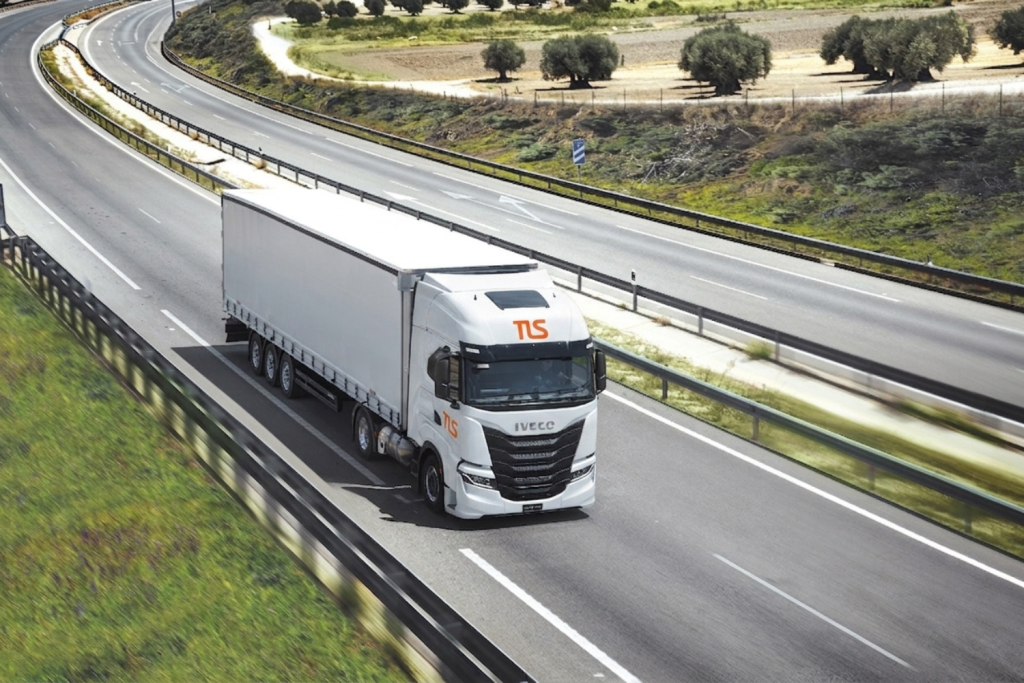
An Iveco LNG truck from Timisoara Logistic Solutions out on the road.
By the time the first truck is delivered, the price gap with diesel has already evaporated to zero. Shortly afterwards, Russia invades Ukraine and gas prices soar. What should have been a brilliant move becomes a millstone around the company’s neck. It is cheaper to leave the trucks parked than to run them. And so they sit, in a corner of the yard, for months on end.
“We regretted buying those LNG trucks a thousand times over.” – TLS management
But that is not where this story ends. Because today TLS believes in the fuel more strongly than ever and five new trucks are already on order. Running on Bio-LNG this time. Here’s why.
What has changed since then
TLS is a typical international carrier. Its trucks ride across Europe day and night, with the Netherlands, Belgium, Germany, France and Romania as its main markets. The management makes the fleet and fuel decisions itself and traces every one of them back to cost per kilometer, range and risk. They always run the numbers before making any decision. That also explains why Hydrotreated Vegetable Oil (HVO) has never been a serious option for the company:
“HVO is more expensive than diesel, and that’s something we can’t sell to our customers.” – TLS management
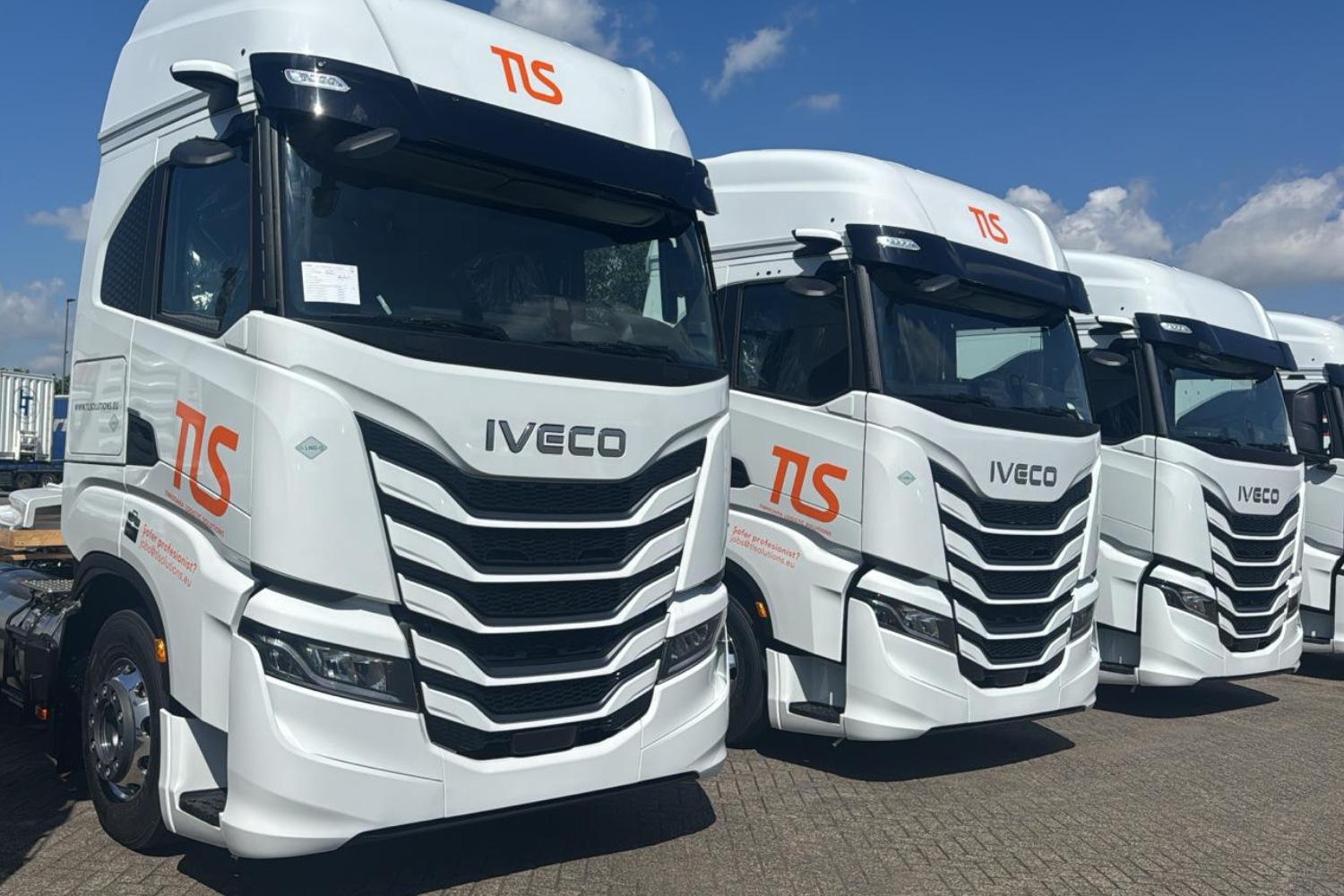
The latest addition to the TLS fleet: five new LNG trucks.
That is why TLS believes in Bio-LNG. It is fundamentally different from the LNG the company once came unstuck on. Where conventional LNG is made from fossil natural gas, Bio-LNG is entirely produced from organic residual streams such as manure and other biological waste. Chemically it behaves identically in the tank — the same trucks, the same refuelling process, the same performance — but its origin is entirely different.
For a transport company, that is valuable in two ways. Bio-LNG delivers the highest CO₂ reduction of any fuel. It can even be more sustainable than running on green electricity. TLS can pass this certified reduction straight on to the customers asking for it. And because Bio-LNG is 100% fossil-free and produced locally, it is far less exposed to wars and other geopolitical events than the fossil LNG that pulled the business case apart in 2022.
Why 2022 cannot repeat itself
The question that keeps coming back, and one that TLS kept asking: what if it happens again? The honest answer is that the price explosion of 2022 was not an accident simply waiting to recur. Three things have changed structurally since.
First: the price is now fixed. Where TLS was at the mercy of the spot price in 2022, multi-year price agreements are increasingly possible today. Should the price of Bio-LNG somehow shoot up after all, a multi-year contract reduces that risk to virtually nil.
“Thanks to Rolande, agreements spanning several years are possible. That gives the business case an advantage in stability over diesel.” – TLS management
Second: Bio-LNG is 100% fossil-free and therefore less exposed to geopolitics. The 2022 spike stemmed from dependence on fossil gas from Russia. Bio-LNG is not only fossil-free, it is also produced locally in the Netherlands and Germany. That combination makes it doubly insulated: were war to break out again on the other side of the continent, the price of Bio-LNG would hold far steadier.
Third: legislation is on Bio-LNG’s side. It is not only electric transport that is being encouraged, those running on Bio-LNG are rewarded too. Measures such as the Dutch truck toll (vrachtwagenheffing), RED III and ETS2 make diesel structurally more expensive, while renewable fuels like Bio-LNG are priced more favourably. The price gap therefore widens year on year, in Bio-LNG’s favour.
Together, those three reasons make the difference between then and now. That is why the carrier that regretted its decision a thousand times over is investing in Bio-LNG again today. Not because TLS has forgotten 2022, but because it understands why the chances of it happening again are next to nil.
What could Bio-LNG mean for your routes?
Did you know that Bio-LNG isn’t just far more sustainable than diesel, but also considerably cheaper per kilometer? With Bio-LNG you pay up to 50% less per kilometer than with diesel or HVO. Our TCO-CO₂ calculator lets you compare cost per kilometer, fuel costs and CO₂ reduction for every fuel, on your specific routes.